Halide Mark II vs Mark III: Should You Upgrade in 2026?
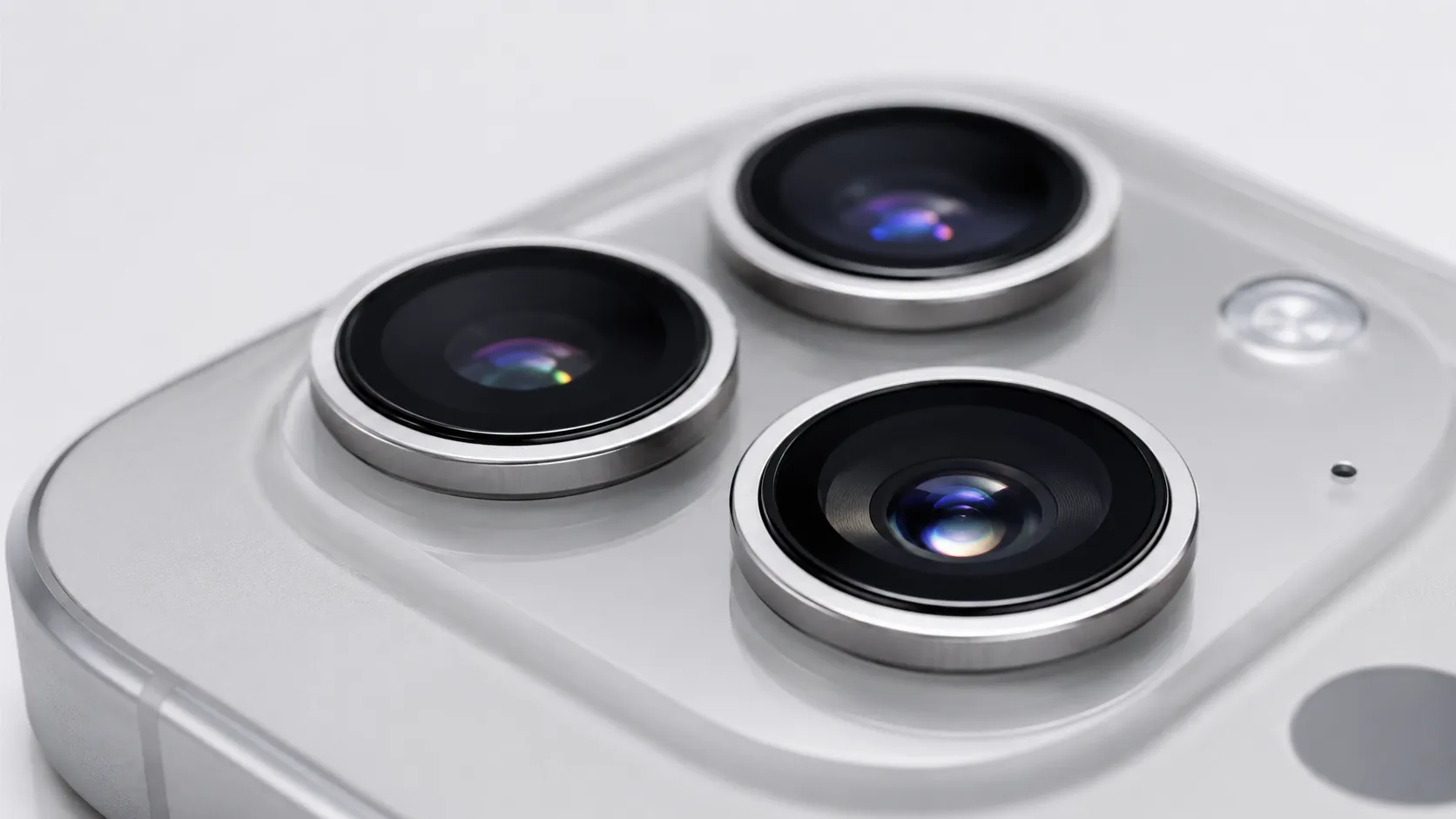
Prices below were read from the App Store listing and Lux Optics’ own pages on August 27, 2026. Where those two disagree, this article says so and explains which one you actually pay.
The short version: Halide Mark III shipped on May 27, 2026. If you bought Halide Mark II outright, or you have an active Halide subscription, Mark III costs you nothing. Lux Optics states it plainly: “Mark III is a FREE upgrade to everyone who bought Mark II, and existing Halide subscribers.” So for most people reading this, “should I upgrade” is not a purchase decision at all. It is a question of whether the new version is a step forward, and on the feature list it clearly is.
The decision that does involve money is a different one, and it belongs to people who do not own Halide yet. That is where the pricing gets interesting, and where the vendor’s own website will mislead you if you let it.
What Mark III Actually Changed
Lux describes five substantial additions over Mark II.
Looks. A film simulation system with five color profiles at launch: Valencia, Rembrandt, Nova, Zephyr and Chroma Noir. Lux states these carry full HDR support rather than being flattened to SDR, which is the usual compromise with filter systems. Looks sit alongside the two processing paths Halide already had rather than replacing either of them.
Photo Lab. A built-in RAW development environment, which is the largest structural change. Mark II captured a RAW file and handed it to something else. Mark III has panels for quick edits, exposure, white balance and the film simulation controls, so a file can be captured and finished without leaving the app.
A redesigned interface, which Lux frames around composition tools and fewer controls competing for the same screen space.
Shutter Priority and ISO Priority exposure modes. Mark II offered manual control and an ML-assisted automatic mode. The priority modes fill the gap between the two, which is the gap most people shooting handheld actually work in.
External RAW import, currently marked beta, for developing files from a standalone camera inside Halide. This is the one to treat cautiously, both because it is beta and because it is the feature furthest from what a phone camera app is for.
Process Zero survives. The reason a lot of people bought Halide in the first place, the mode that bypasses Apple’s computational pipeline and gives you an unprocessed RAW file, is still there and still central to the app.
The Pricing, and Why the Vendor’s Own Site Gets It Wrong
Here is where checking matters. Lux Optics’ Mark III launch page says the one-time purchase is $59.99. The App Store listing, which is the page you actually pay on, lists “One Time Purchase $69.99”.
Both pages belong to the same company. Only one of them is a price. The App Store is the point of sale, so $69.99 is the number that will appear at checkout; the $59.99 on the launch post is a figure from May that nobody went back and changed. This is not unusual behavior and it is worth internalizing as a habit: a vendor’s marketing page, blog or comparison table can carry a stale price for months or years, and the only page that has to be correct is the one that takes your money.
The listing carries two subscription entries, both named “Pro Camera, Editor, and Lessons”, at $19.99 and $9.99. The App Store’s in-app purchase list does not print the billing period beside them, so read this the way it is meant: the coverage at launch described a $20 yearly plan and a $10 monthly plan, which matches those two figures, and the arithmetic below assumes that pairing.
On that assumption the monthly plan is a poor deal held for any length of time. Two monthly payments come to $19.98, one cent under the whole year. The third payment passes the annual price. Seven payments come to $69.93, four cents under the one-time purchase, and the eighth passes that too. The monthly tier is a way to try the app with a rolling charge attached, not a way to spread the cost.
| Price | Effective cost after 1 year | |
|---|---|---|
| Monthly | $9.99 | $119.88 |
| Annual | $19.99 | $19.99 |
| One-time purchase | $69.99 (App Store) | $69.99, then nothing |
If you intend to keep Halide, the annual plan is the cheapest way to run it and the one-time purchase pays for itself against the annual plan in three and a half years. If you are unsure, take the free week rather than the monthly plan.
Requirements, and Who Gets Left Behind
The App Store lists Halide Mark III at version 3.1.2, last updated 11 July, and requires iOS 18.0 or later. That is the practical constraint on upgrading, and the one thing that can turn a free upgrade into a “no”. If you are holding an older iPhone on iOS 17, the free upgrade is not available to you in any useful sense, and Mark II remains what you have.
Note also that the developer is Lux Optics Incorporated and that Mark III ships as a separate App Store listing rather than an update to the Mark II listing. Free-for-existing-owners upgrades that arrive as a new listing sometimes require signing in with the Apple Account that made the original purchase before the entitlement appears.
So: Should You Upgrade?
If you own Mark II or subscribe, and you are on iOS 18: yes, and there is nothing to weigh. It costs nothing, Process Zero is intact, and Photo Lab removes a step from every RAW you shoot.
If you own Mark II and you are on iOS 17 or earlier: you cannot, and Mark II is not withdrawn from your library. There is no urgency here.
If you do not own Halide at all: the question is the same one Mark II posed, with a better answer. The app is for people who want a RAW file that Apple’s pipeline has not touched, plus manual control that does not require menu diving. If that is not a sentence you feel strongly about, the built-in Camera app is genuinely excellent and free. If it is, take the free week, then buy the annual plan rather than the monthly one.
What Mark III does not do is video. Halide remains a stills application; Lux sells Kino separately for video. If you want one app for both, this is not it, and that has not changed between versions.
Frequently Asked Questions
Is Halide Mark III a free upgrade from Mark II?
Yes. Lux Optics states that Mark III is a free upgrade for everyone who bought Mark II and for existing Halide subscribers. It requires iOS 18.0 or later, which is the only barrier for people on older devices.
How much does Halide Mark III cost for a new user?
The App Store lists a one-time purchase at $69.99, an annual subscription at $19.99 and a monthly subscription at $9.99. Note that Lux’s own launch page still advertises the one-time purchase at $59.99; the App Store is the page that charges you, so $69.99 is the figure to plan around.
Does Halide Mark III still have Process Zero?
Yes. Process Zero, the mode that bypasses Apple’s computational processing to produce an unmanipulated RAW file, remains a core part of the app and sits alongside the new Looks film simulations and Apple’s default processing.
What is Photo Lab in Halide Mark III?
It is the built-in RAW development environment new in Mark III, with panels for quick edits, exposure, white balance and film simulation. Its practical effect is that a photograph can be captured and finished inside Halide rather than exported to another editor.
Does Halide record video?
No. Halide is a stills-only application in both Mark II and Mark III. Lux publishes a separate app, Kino, for video.
Recommended reading
PDF Editors for Mac: What They Cost, and What Preview Already Does
What a Mac PDF editor really costs in 2026. Preview's exact limits, why every App Store listing says Free, and which tools are subscription, buy-once, or genuinely free.
Mac Cleaner Apps in 2026: What Each One Costs and Removes
Mac cleaner apps in 2026 compared on price and on what they actually delete: the macOS built-in tools, free apps like OnyX and Mole, and the paid suites, including the checkout terms.

Mac Activity Monitor: How to Read CPU, Memory Pressure and Energy Impact
Learn to read Mac Activity Monitor like a pro: CPU, Memory Pressure, Energy Impact, and which processes are safe to quit in macOS 26 Tahoe.